Ad Fatigue Alert: Meta Ads Now Last Just 3 Days
Creative fatigue on Meta isn't just a fluke. Since Andromeda, the median lifespan of an ad is only 3 days. Here's why that's happening and what you can do instead.
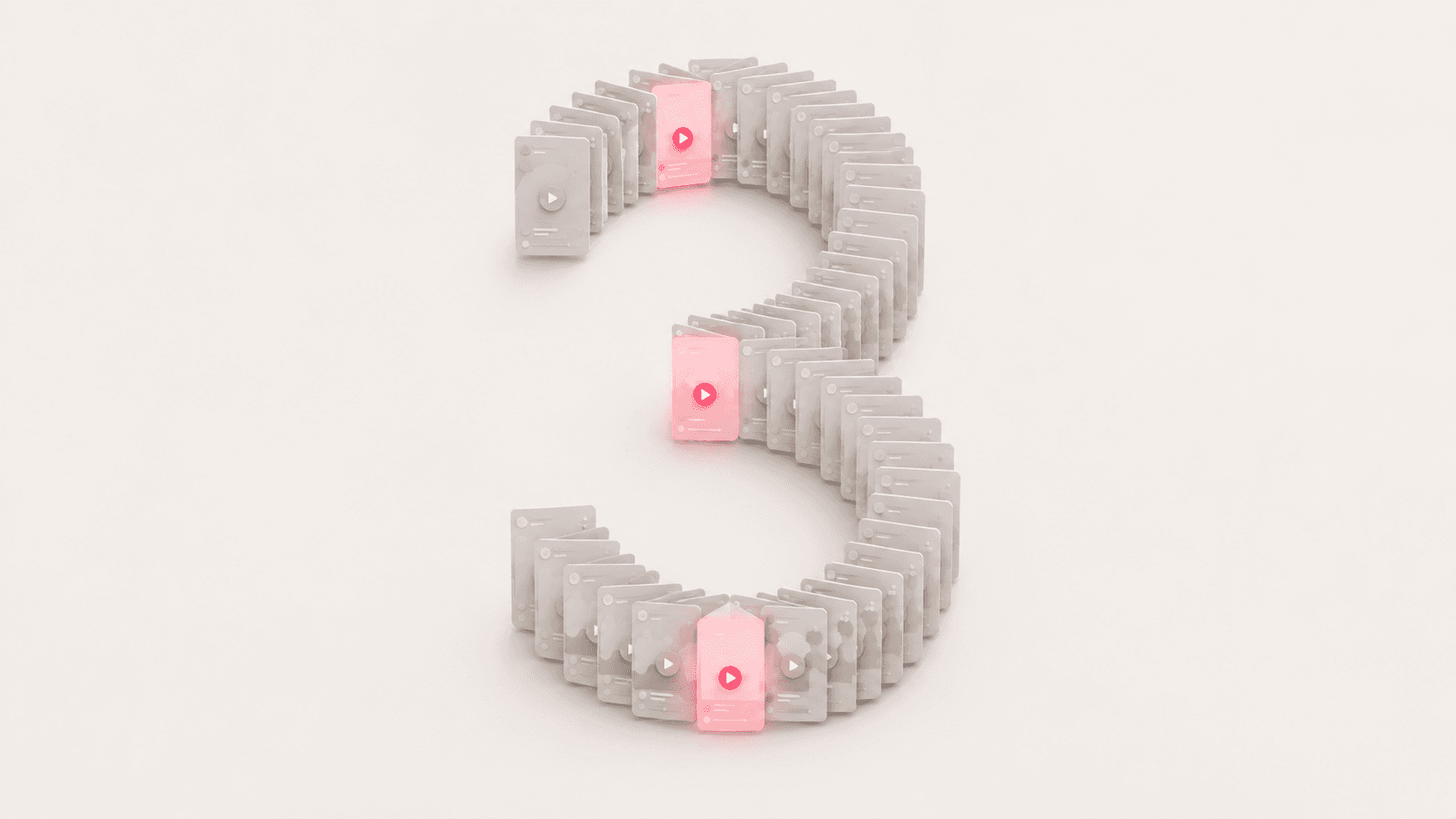
If you're managing acquisition on Meta, you know the drill. A creative takes off, ROAS looks great, and you breathe easy. Ten days later, CPM spikes, CTR drops, and CPA goes haywire. The ad is dead. Time to start over.
That's what we call creative fatigue, and most articles will sell you ten tips to "fix" it. Change the visual, cap the frequency, broaden the audience. It's just tinkering. Creative fatigue isn't a bug you fix. Since Andromeda started running the show, it's a system constant. Your ads are designed to die quickly. The only question that matters is what you launch next.
And the pace is harsher than most people think.
What exactly is creative fatigue?
Creative fatigue is when your audience has seen the same creative too many times. Meta formalizes it in their own help center: when the cost per result of an ad is about twice that of your other ads, it gets labeled "Creative fatigue" in the ad manager. It's not an agency opinion, it's Meta's label.
It doesn't die all at once. It deteriorates in a fairly predictable order. First, the hook rate drops, people scroll past before 3 seconds. Then the CTR slips. Next, CPM rises because Meta charges you more to show the same thing to the same people. And only at the end does CPA explode. The trap is, if you wait to see ROAS change to react, you're three signals too late.
The thresholds operators look at in 2026 are pretty stable:
- Frequency exceeding 2.5 to 4 over a short window.
- CTR dropping by at least 15% compared to your recent baseline.
- CPM rising by 15 to 40% simultaneously.
When these three align, the creative's life is over. Not in two weeks. Now.
Why your creatives die twice as fast as before

Here's the number that should change how you work. Out of 2.9 million Meta ads launched between January 2025 and April 2026, the median lifespan of a creative is 3 days. 75% are cut within 8 days. Only 5% make it past 38 days.
Three days. Not three weeks.
Sure, a creative that really scales lasts longer, with high-spend ads averaging 17 days. But even your winners, the ones you back with budget, are dead in roughly 2 to 3 weeks. The myth of the ad running for six months is from a bygone era.
What changed is Andromeda, the distribution engine Meta completed rolling out everywhere in October 2025. I discussed it in detail inthe article on post-Andromeda creative strategy, but the key point is summed up in one sentence: creative has become the targeting signal. Andromeda reads your image, your copy, your video, and decides who should see it. It finds your best buyers quickly. And exhausts them just as fast.
Before, a creative would tire because your audience had seen it too much. Now, the matching is so precise that the optimal pool is consumed in a few days. When your creative wears out, Andromeda doesn’t just lose a bit of efficiency. It loses its targeting mechanism. That’s why the drop is so sharp.
One figure to complete the picture: accounts that have figured out how to feed Andromeda run at 20 to 35% higher ROAS than those sticking to old structures. The difference isn’t in audience settings. It’s in what you feed the machine.
Stop searching for the perfect creative

This is where I disagree with 90% of what's written on the topic.
Everyone treats creative fatigue as a quality issue. "Your ad wears out, make a better one." As if there were a perfect creative somewhere that could withstand time. It doesn’t exist. In a system where the median lifespan is 3 days, looking for the indestructible ad is like trying to win a game with changed rules.
Jonas Lit, co-founder of Skaler, puts it better than I can. His observation: the median Meta ad in 2026 lives for 3 days, 75% are killed in 8 days, and the brands that perform stop searching for the perfect ad and set up a real production line. It’s exactly what I tell my advertisers.
The lever you really control isn’t the perfection of a creative. It’s the number of fresh concepts you bring to market each week. It’s not your creative talent that’s at fault. It’s your output.
A concrete example. We work with a dietary supplement brand. The principle is simple: we refresh about 30% of their concepts each week. Out of 10 creatives launched, 2 to 3 are new concepts. We analyze all distribution data, double the budget on what works, and for what declines, we look for new angles. The starting signal is always the same: CTR dropping by about 15% from the previous period and CPM spiking. At that point, the creative is at the end of its life, and we replace it before it drags the account down.
What this creates is creative depth. Always something fresh in the pipeline, never relying on two winners that are burning out. That’s managing creative fatigue. You don’t fight it one creative at a time, you stay a step ahead.
Why traditional remedies no longer cut it
Look at the usual list of "solutions to ad fatigue" with the 3-day story in mind.
Capping frequency? It slows exposure, doesn’t create new concepts. You gain a few days. Broadening the audience? Andromeda already handles targeting better than you, and it doesn’t solve the fact that the creative itself is burnt out. Rotating formats, changing a background, subtitling differently? You’re recycling the same idea. Meta sees it, your audience sees it. You push the deadline by 48 hours.
None of these actions address the real constraint, which is the flow of concepts. They’re optimizations on a creative that’s going to die anyway. Useful for squeezing a bit more life out of a winner. Useless for solving the underlying problem.
The underlying problem is arithmetic. If your creatives live roughly 10 to 15 days and you produce 4 a month, you’re structurally in deficit. You spend your time chasing your own dead ads. No setting tweak compensates for a production volume problem.
The only real answer: industrialize your creative production

If creative fatigue is structural, the response must be structural too. It’s not about reacting better when an ad dies. It’s about always having something to replace it.
What I tell my advertisers today: with Andromeda, you refresh your creative batches every 10 to 15 days, and you’re in constant search for new concepts and formats. No need to reinvent the wheel every time. You rely on a concept matrix, expand on successful angles, and continuously test new ones. It’s a system, not a stroke of genius.
The hitch is that this pace breaks a traditional production model. Rolling out 6 new concepts a week with UGC creators means finding them, briefing them, waiting for V1s, making corrections, managing rights. By the time the batch arrives, your current creatives are already dead. And the budget explodes long before hitting the volume.
This is precisely where AI UGC changes the equation. For a brand, we easily produce 12 new UGC-style videos, or 6 new concepts, per week. The cost of a video starts at 80 euros, compared to around 200 euros for traditional UGC, not even counting the operational load to get it. The turnaround is days, not weeks. And if a concept doesn’t work, you generate a variant the same day instead of rebriefing a creator.
Our job is to blend the four: distribution data to know what to cut and what to double down on, creative strategy to find the angles worth pursuing, cost control to maintain volume without blowing the budget, and production firepower through AI to deliver the flow. Taken separately, none is enough. Together, they turn creative fatigue from a problem endured into just another production parameter.
If you want to dive deeper into pure production, I’ve detailedthe true cost of a UGC videoin another article, because most people’s calculations are wrong.

FAQ
How long does a Meta creative last in 2026?
The median lifespan is 3 days across all ads, and 75% are cut within 8 days. Creatives that truly scale last longer, around 17 days on average. In practice, plan to refresh your batches every 10 to 15 days for cold prospecting when the spend is significant.
How to detect creative fatigue before ROAS drops?
Don’t look at ROAS first, it’s the last to move. Monitor the hook rate and CTR, which drop first, then the rising CPM. Three simple thresholds: frequency beyond 2.5 to 4, CTR dropping by at least 15% compared to the baseline, CPM increasing by 15% or more concurrently.
How often should you change your Facebook creatives?
Enough to never rely on a single winner nearing its end. Practically, a 20 to 30% concept refresh each week, and a complete batch refresh every 10 to 15 days. The goal isn’t to change everything at once, but to always have something fresh in the pipeline.
Won’t producing more creatives just cost me more?
It depends on your production model. With creators, yes, volume is costly and time-consuming. That’s precisely the barrier AI UGC breaks: the flow becomes a parameter you control, not a budget constraint.
Stay ahead of fatigue instead of suffering it
Creative fatigue isn’t a curse to endure. It’s the normal mechanics of a system that finds and exhausts your buyers in a few days. You won’t beat it by chasing the perfect creative. You get ahead of it by establishing a flow of concepts that your dead ads can never catch up with.
The day you want to shift from chasing your creatives to always staying ahead,we’re here for that.