AI UGC: What It Is, Benefits, and How to Use It in Digital Marketing
Uncover the power of AI UGC: produce content faster and cheaper, and explore its top use cases in digital marketing, from e-commerce to SaaS.
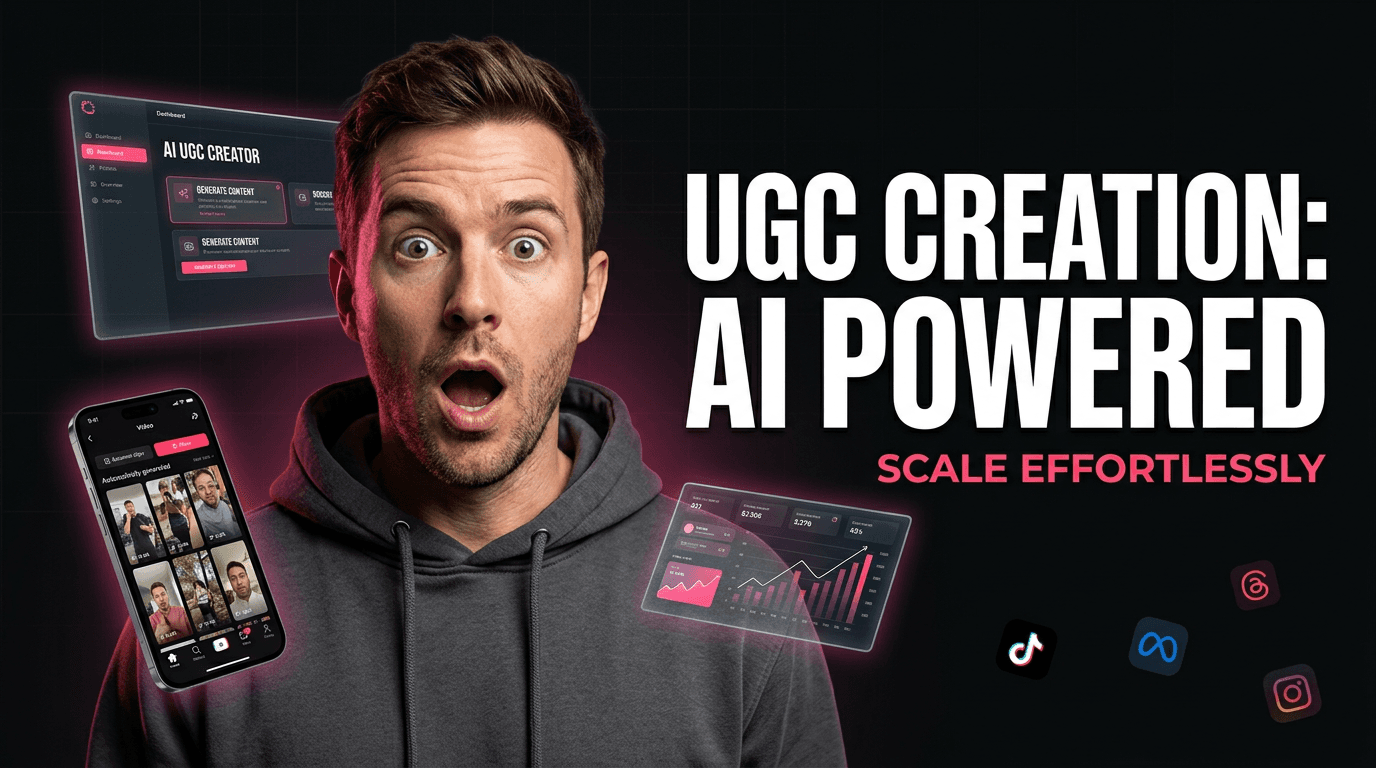
AI UGC stands for "user-generated content" created by artificial intelligence, typically in the form of videos featuring realistic AI avatars speaking directly to the camera. This method allows marketing teams to produce UGC-style ad creatives without the need for filming, actors, or lengthy production times. It's used to scale paid campaigns on Meta, TikTok, YouTube, and other acquisition channels.
What is AI UGC and why is this format booming in 2025-2026?
AI UGC, or AI-generated UGC, is video or visual content automatically created by AI tools that mimic the authentic and spontaneous style of real user-generated content. Essentially, an ai ugc video generator takes a script, an avatar (face, voice, tone), and produces a ready-to-air video in just a few minutes.
Traditional UGC works because it feels like a genuine review, not an ad. AI UGC maintains this aesthetic while eliminating logistical constraints: casting, filming, editing, and back-and-forth with creators. The result? Marketing teams can produce dozens of variations of the same ai ugc video to test hooks, arguments, and CTAs without blowing their budget.
Adoption is massive. According to AppMagic's Mobile Market Landscape 2026, 56 of the top 100 grossing mobile games use AI-generated ad creatives in 2025. It's no longer an experiment; it's become a production standard. And 63% of marketers plan to integrate AI into their influencer campaigns by 2026.
The Real Benefits of AI UGC for Marketing Teams
Cutting Costs and Production Time
A traditional UGC creative requires a brief, a creator, filming, edits, and often several weeks. An ai ugc creator like Hoox can produce a video in minutes, at a fraction of the cost. As the lifespan of an ad creative shortens, this speed becomes a direct competitive advantage. Teams without an AI production pipeline face a cost and speed disadvantage, as highlighted by Singular.
Scalability of Creative Testing
One of the most tangible benefits: creating 30 or 50 variations of the same ad to find the winning combinations. It becomes possible to test different hooks, avatars, and value propositions. ai ugc ads allow for a level of iteration that's impossible to achieve manually. According to Aspire, UGC/IGC content reduces CPA by 30% compared to brand-produced content.
Personalization by Audience and Market
An ai ugc ad creator enables tailoring the same message for different personas, languages, or markets. A French version with a 25-year-old female avatar and an English version with a 40-year-old male avatar can be produced in minutes. This large-scale personalization meets the needs of teams managing multi-market campaigns.
For a detailed comparison of performance between the two approaches, check out our analysis AI UGC vs Traditional UGC.
Videos with Integrated CTAs
Marketers searching for "ai ugc with cta" have a specific need: videos that don't just tell a story but also convert. Hoox integrates calls-to-action directly into generated videos, eliminating the extra post-production step and aligning the creative with performance goals from the start.
AI UGC Use Cases in Digital Marketing
AI UGC for E-commerce
The most common use case. E-commerce brands use ai ugc videos to create product testimonials, simulated unboxings, and on-camera demonstrations. The goal: fuel Meta Ads and TikTok Ads campaigns with native content that blends into the feed without looking like an ad. For more on effective formats, explore UGC use cases on Facebook Ads and TikTok Ads.
AI UGC for SaaS
Software publishers use ai ugc marketing to produce short videos that explain a product benefit in 30 seconds. An avatar presents the problem, shows the solution, and ends with a CTA. This is particularly effective for retargeting campaigns and landing pages, where the UGC video format outperforms static visuals in engagement rates.
AI UGC for Mobile Apps
Mobile gaming led the way: 56 of the top 100 games already use AI creatives. But productivity, fitness, or finance apps are following the same trajectory. The need is the same: produce a high volume of varied creatives to feed the optimization algorithms of ad platforms. An ugc ai video maker helps maintain this pace without multiplying costs.
AI UGC for Agencies and Freelancers
ai ugc creators aren't just for large teams. Performance agencies and media consultants use these tools to offer creative production services to their clients without managing a network of creators. Hoox covers all these use cases from a single interface, with customizable avatars and fully automated production.
How to Create AI UGC Ads in Practice
Creating ai generated ugc ads follows a four-step process:
- Write the script: hook, main argument, social proof, CTA. 15 to 45 seconds depending on the target format.
- Choose the avatar: select a face, voice, and tone that match the target audience. Platforms like Hoox offer customizable avatars or the option to create your own.
- Generate the video: the AI synchronizes text, voice, and facial movements. The video is ready in minutes.
- Iterate and test: produce multiple variations with different hooks, alternative CTAs, and multiple avatars to feed A/B tests.
For a detailed understanding of how AI-generated UGC video creation works, a dedicated article breaks down the technical process.
AI UGC vs Human UGC: Complementary, Not Replacement
The question "will AI replace UGC" comes up often. The short answer: no. AI doesn't replace human UGC creators. It solves a different problem: the need for volume and speed in paid campaigns.
A human creator brings authenticity, creativity, and emotional connection that AI doesn't yet perfectly replicate. But when you need to produce 40 variations of the same concept to feed Meta or TikTok's algorithm, hiring 40 creators isn't realistic or cost-effective.
The winning strategy combines both: human creatives for flagship campaigns and brand content, ai ugc videos for volume, testing, and rapid iteration. 37% of consumers, and 46% among Gen Z, are more interested in a brand using AI influencers, confirming that acceptance of the format is growing.
Free Tools vs Professional Platforms
If you're looking for a ai ugc video generator free, be aware that free options exist but come with significant limitations:
- visible watermark
- lower voice quality
- generic avatars
- lack of integrated CTA
- restrictions on the number of videos
For exploratory tests, it's a starting point. For real advertising campaigns, the quality of the output directly impacts performance.
Professional platforms like Hoox, HeyGen, or Creatify offer features tailored to marketing teams:
- customizable realistic avatars
- natural multilingual voices
- export in standard ad formats
- high-volume production capability
Hoox stands out for its focus on performance ads, with videos designed to convert and CTAs integrated from the get-go.
FAQ
What exactly is AI UGC?
AI UGC is "user-generated content" created by artificial intelligence. It usually takes the form of short videos with a realistic avatar speaking directly to the camera, mimicking the spontaneous style of user testimonials. Brands use it to produce ad creatives at scale without relying on actors or content creators.
How to make AI UGC ads perform?
To create ai ugc ads that convert, start with a script focused on a single customer benefit. Choose an avatar that matches your target demographic. Generate at least 5 to 10 variations with different hooks and CTAs. A/B test them on your paid channels. Platforms like Hoox automate this entire workflow from a single interface.
Is AI UGC legal?
Yes, AI UGC is legal in most jurisdictions, provided certain rules are followed. You must use avatars for which you have rights, whether synthetic or created with consent. Some ad platforms require disclosure of AI-generated content. In Europe, the AI Act imposes transparency obligations for synthetic content. As long as you use a tool that provides licensed avatars, like Hoox, you remain within a clear legal framework.
What are the best AI tools for generating UGC content?
The most used tools in 2025-2026 include HeyGen, Creatify, Arcade, and Cantina.
- HeyGen: versatile, well-known
- Creatify: focused on e-commerce
- Arcade: solution used for AI-assisted video creation
- Cantina: another market player
Hoox positions itself as a specialized platform for performance marketing teams, with customizable avatars, automated high-volume production, and videos with integrated CTAs. The choice depends on the use case: branding, ad performance, or organic social content.
Make the Move to AI UGC Production
AI UGC is no longer an experimental concept. It's a creative production lever adopted by the most successful marketing teams, from mobile gaming to SaaS and e-commerce. The question is no longer "should we test it" but "how to scale effectively".
If you want to create your first ai ugc videos or multiply your creative variations without inflating your production budget, Hoox allows you to generate ad videos with personalized AI avatars, integrated CTAs, and a workflow designed for paid campaigns, all from a single interface, in just a few minutes.